CONTENTS
In the dynamic world of social media, keeping up with the most popular platforms in the United States is essential.
Let’s take a deep dive into the top social media platforms by popularity and uncover the answer to the pressing question: What is the most popular social media platform in the USA this year?
Top U.S. Social Media Platforms
YouTube (84%)
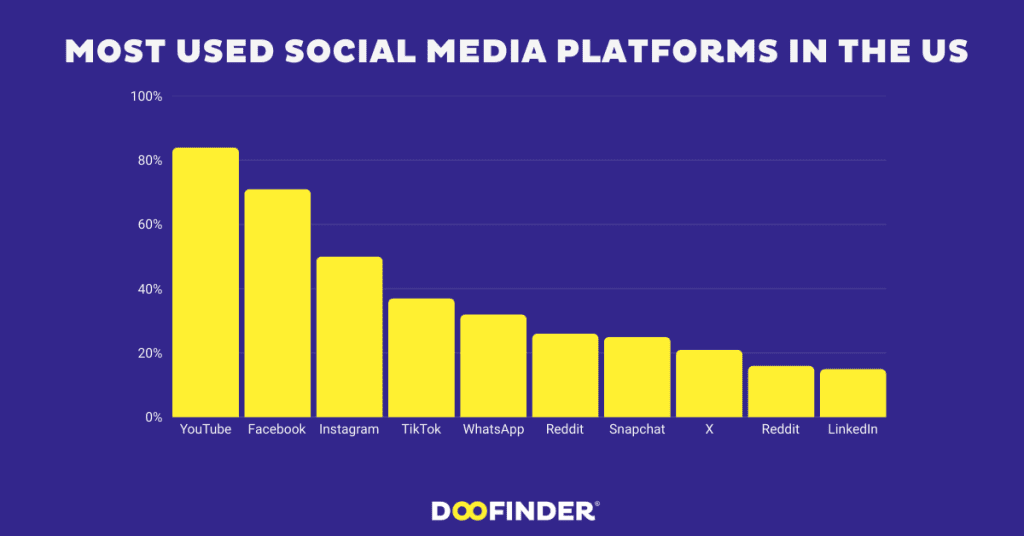
YouTube continues to dominate as the most-used online platform in the United States, with 84% of U.S. adults reporting that they use it. Its vast library of entertainment, tutorials, commentary, livestreams, and educational content allows it to appeal to virtually every demographic.
Facebook (71%)
At 71% usage, Facebook remains the most widely used traditional “social networking” site. Despite increased competition, it continues to thrive thanks to groups, events, marketplace tools, and its importance for local communities and older demographics.
Instagram (50%)
Instagram holds a strong 50% usage rate among U.S. adults. Its focus on imagery, Reels, influencer culture, and brand storytelling keeps it central to visual-first social media engagement.
TikTok (37%)
TikTok reaches 37% of U.S. adults, reflecting its meteoric rise. Short-form video remains its strength, driving trends, music discovery, comedy, and youth culture — while increasingly appealing to older audiences as well.
WhatsApp (32%)
WhatsApp has grown to 32% usage in the U.S., boosted by its encrypted messaging, group chat features, and rising popularity among multicultural and international communities.
Reddit (26%)
Reddit now sits at 26%, surpassing platforms like Snapchat and X. Its community-driven structure, topic-focused subreddits, and anonymity continue to attract users looking for deep discussion rather than purely social networking.
Snapchat (25%)
With 25% of U.S. adults using it, Snapchat retains a solid foothold — especially among younger adults. Ephemeral messaging, AR filters, and private friend-to-friend communication keep it relevant in a crowded market.
X (formerly Twitter) (21%)
X has declined to 21% usage. While still important for news, politics, real-time alerts, and creator commentary, its user base has shrunk compared to competitors like Reddit and TikTok.
Pinterest (~16%) (estimated)
Though not included in Pew’s primary 2025 Top-8 table, Pinterest is consistently the next-largest platform in supplemental datasets and industry analyses. It remains a major hub for inspiration, design ideas, home projects, fashion, and recipes.
LinkedIn (~15%) (estimated)
Twitch, with a 10% share, stands out as a live streaming powerhouse. Focused on gaming and live content creation, Twitch has developed a dedicated community of users who appreciate real-time interactions, live broadcasts, and the unique atmosphere fostered by its platform.
BeReal. (8%)
With an 8% share, BeReal. has carved a niche as a platform emphasizing authentic connections. Its focus on genuine interactions and unfiltered content contributes to its appeal in an era where authenticity is increasingly valued in social media interactions.
Clubhouse (6%)
Clubhouse, securing a 6% share, is recognized for its audio-centric approach to social media. The platform facilitates live, voice-based discussions, attracting users looking for immersive and dynamic conversations in a more informal setting.
Flickr (6%) and Tumblr (6%)
Both Flickr and Tumblr, each with a 6% share, continue to serve as platforms for visual content. Flickr focuses on photography and image sharing, while Tumblr combines visuals with blogging, creating spaces for artistic expression and diverse content creation.
Yelp (6%)
Yelp, with a 6% share, retains its role as a platform for reviews and recommendations. Users turn to Yelp to discover local businesses, share experiences, and contribute to the community-driven knowledge base of services and establishments.
Foursquare (5%)
Foursquare, holding a 5% share, remains relevant as a location-based platform. Users utilize Foursquare for discovering new places, checking in, and sharing location-based recommendations, contributing to the social aspect of location-based exploration.
WeChat (4%)
With a 4% share, WeChat stands out as a multi-functional communication platform. Popular internationally, WeChat integrates messaging, social media, and various services, offering users a comprehensive digital communication experience.
MeWe (3%)
MeWe, securing a 3% share, positions itself as a privacy-focused social network. Emphasizing user data protection and privacy features, MeWe attracts individuals seeking alternative social media experiences with enhanced security measures.
Other (2%)
The 2% attributed to “Other” represents a category of diverse and niche social media platforms catering to specific interests or communities. These platforms contribute to the rich tapestry of the U.S. social media landscape, offering unique experiences for users with specialized interests.
Social Media Platforms in the US
In conclusion, the U.S. social media landscape reflects a diverse array of platforms, each catering to different aspects of social interaction, content creation, and community engagement.
From the widespread appeal of giants like Facebook and YouTube to the niche focus of platforms like BeReal. and Clubhouse, users have a multitude of options to explore and connect in the dynamic world of social media.
As technology evolves, these platforms will continue to shape the digital landscape, playing pivotal roles in the way individuals communicate, share, and connect online.
Ready to discover more?