Most retailers focus on the later stages of the consumer decision-making process: guiding users to their products and closing the sale. But you can influence their purchasing decisions way earlier — even before they start looking for your product. And that’s what we explore in this article.
Here, you will find answers to two main questions: “When does the consumer decision process begin?” and “How can eCommerce businesses help customers realize their needs?” We will also show you how to support customers throughout the remaining stages of their journey.

When Does the Consumer Decision Process Begin? The 5 Stages
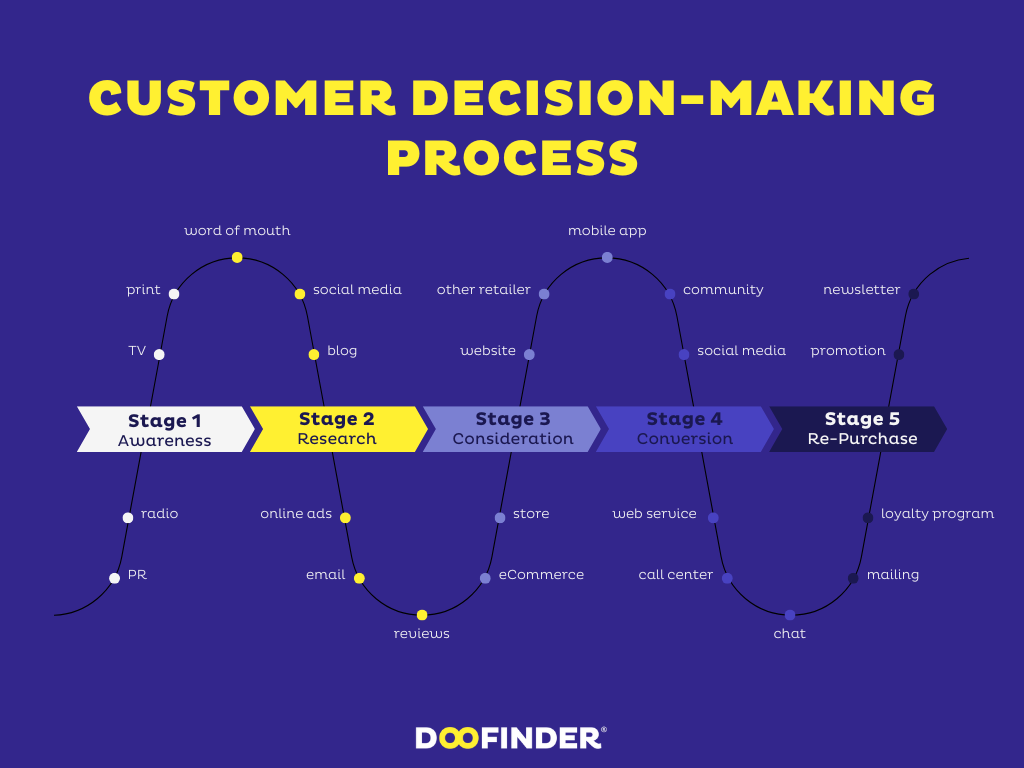
The consumer buying process, also known as the customer journey or customer funnel, consists of five stages:
- Need recognition (Awareness)
- Information search (Research)
- Alternative Evaluation (Consideration)
- Purchase decision (Conversion)
- Post-purchase evaluation (Re-Purchase)
Let’s explore what happens at each stage.
Visit our page for a detailed guide on how to map out your eCommerce customer journey.
1. Need Recognition (Awareness)
During the first stage of the journey — the awareness stage — the consumer discovers they need a new product. That’s why we often call it the need recognition stage.
The need could be a new problem that needs solving, or the realization that the existing solutions don’t cut it anymore. For example, they may be changing their diet, and they need a blender to make smoothies. Or maybe their old blender still works, but it doesn’t handle frozen fruit well anymore.
This is arguably the most important stage during the whole journey. The customer needs a reason to buy your product. That’s why the following section explores different kinds of needs in more detail.
2. Information Search (Research)
Once they recognize the need, consumers start looking for information about the available solutions. They search online, read guides and reviews, check social media, and browse competitors.
The duration of the information search stage depends on the complexity of the problem they need to solve. If they need a new blender, this is relatively straightforward. If they’re after a new CRM tool to support their sales, the problems to solve are much more complex to understand and require more thorough research.
3. Alternative Evaluation (Consideration)
After the initial research, the consumer evaluates available products or services to decide which one best meets their needs and the best place to buy it.
They weigh features, price, ease of use, reviews, and tons of other factors, like shipping costs or post-purchase support. So if they’re looking for a pair of running trainers, they will know which make, model, size, and color they want, and where they want to make the purchase.
4. Purchase Decision (Conversion)
During the conversion stage, the customer makes their buying decision.
This isn’t something you should take for granted. Even when the goods are in the cart, most buyers will abandon the transaction, never to be seen again. They either change their mind and choose another product, delay their purchase, or decide not to buy it at all.
But hopefully, this isn’t the case with your product, and the customer successfully completes the transaction.
5. Post-Purchase Evaluation (Re-Purchase)
The sale isn’t the final stage of the consumer decision-making process. Once they make the purchase, consumers evaluate the product and their retail experience, and this impacts their future purchasing behavior.
If they’re satisfied, they will post positive reviews, recommend the products to their friends and colleagues, and most importantly, buy products from the same brand or the same vendor again. If they aren’t, they may look for a product that better satisfies their needs.
For example, if their new running shorts chafe, they will start looking for a better-fitting pair. In the meantime, their experience returning the item to the store may affect their decision to buy from the same store in the future.
So, the customer journey is far from linear. Post-purchase experience feeds into the need recognition stage, creating a loop.
Editor’s note: Not all customers follow the same buying process; they move at their own pace, skip stages, go back and forth, and drop out. For example, lots of purchase decisions happen spontaneously without research or consideration.
Triggers Behind Purchase
Some customers start their journeys with a clear idea of their needs. Others buy products they never thought they’d need — they just come across a product that sparks their interest and get their credit cards out without thinking much about it.
That’s because products satisfy different kinds of needs. Understanding them allows marketers to influence consumer behavior.
Let’s unpack the types of purchasing triggers and what they mean for eCommerce.
Internal vs. External Stimuli
The breakdown into internal and external stimuli is the most basic needs taxonomy.
Internal stimuli are emotional, physiological, and functional in nature, like hunger, boredom, or feeling disorganized. As a marketer, you can’t trigger them, but you can point the consumer toward your product as a means to satisfy them. For example, you can make them choose your soda to quell their thirst.
External stimuli, on the other hand, are cues from the environment. For example, ads, films, or interactions with others. You can use these to create a need. For example, your ad can make them realize there are better blenders for their smoothies.
Need vs Opportunity Recognition
Consumers act to either maintain the current state or to improve it. That’s where the distinction between need and opportunity recognition comes in.
Need recognition happens when the shopper’s actual state drops below an acceptable level. For example, when you run out of coffee, you need to buy more.
Opportunity recognition occurs when the desired state shifts upward — even if nothing is wrong with the current situation. For example, after buying ground coffee for years, you may realize that a quality coffee grinder gives you fresher and better tasting coffee.
Need recognition is problem-driven, while opportunity recognition is aspiration-driven — it helps customers imagine a better version of their life. Most brands are good at solving obvious problems but not so good at capturing users’ imagination and showing them how their product can improve their lives. If you nail it, you get a real competitive edge.
General vs Selective Problem Recognition
Some needs are broad. Others are highly specific. For example, one buyer may be hungry and they don’t care what they eat, while their friend may be more selective and want a dark chocolate Kit Kat.
As a brand, you want buyers to be selective about their choice — and choose your product. As a retailer, it doesn’t matter as long as they buy it from you. However, understanding where your customers fall on this spectrum is necessary to tailor the shopping experience.
If they want a particular product, you need to make it easy to find. For instance, by providing relevant search results, detailed filters, and fast navigation. If their need is general, they’re open for exploration, so you need to provide them with a variety of choices, including ones they aren’t aware of.
Maslow’s Hierarchy of Needs: Not All Needs Matter the Same
The same stimulus may trigger the purchase process among some buyers and go completely unnoticed among others. That’s because, according to Maslow’s theory, we experience needs differently depending on our life circumstances.
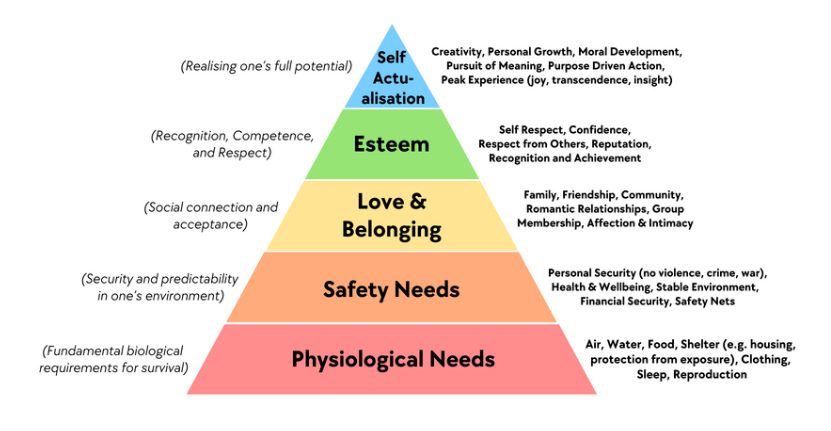
Maslow breaks down human needs into five categories, starting from the bottom of the pyramid:
- Physiological needs, like food, shelter, and clothing.
- Safety needs, like personal security or financial stability.
- Love and belonging, like community or romantic relationships.
- Esteem, for instance, self-respect, confidence
- Self-actualization, for example, creativity or personal growth.
Before we experience the higher-level needs, we need to satisfy the basic ones. If you’re hungry, self-respect is of secondary importance, and you’ll happily eat at McDonald’s even if you never their touch the food otherwise.
Maslow’s taxonomy has two implications for retailers and marketers:
- Customers must be ready for your product or service. If you’re selling a mindfulness course, target users whose lower-level needs are satisfied; customers who are hungry or concerned about their well-being won’t be receptive to your marketing efforts.
- Your messaging needs to reflect where your target audience is on the pyramid. For example, if you’re selling a jacket to someone who’s cold, focus on its warmth. If you’re selling to someone who cares about social connection and acceptance, show them how the jacket will help them belong to their peer group.
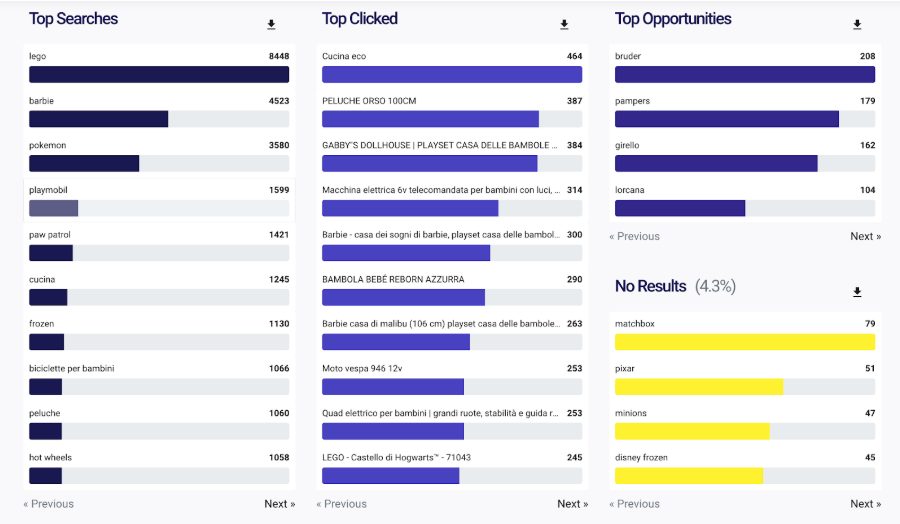
To understand your target audience, you need to conduct in-depth market research. eCommerce tools like Doofinder can help you analyze user behavior online to better tailor their shopping experience.
How to Help Consumers Realize Their Needs
Now that you understand what motivates consumers to start the buying process, it’s time to look at practical ways to help them realize their needs.
Use Visual Triggers to Spark Desire
Imagine browsing your Instagram feed and seeing someone’s photo with a personalized leather planner. Suddenly, your plain spiral notebook may not feel so inspiring. You want a planner like that, too!
Shoppers often start the journey when they see something they didn’t know they wanted (or even existed). In other words, you can create a need by showing them images or videos of your product or service.
Here are a few ideas on how to do it:
- Run product ads with lifestyle images and videos. Show your product in real, relatable settings that help shoppers imagine it as part of their own lives. For example, show your fitness gear being used outdoors or your cookware in a cozy kitchen setting. Contextual relevance makes products more desirable.
- Post engaging visual content on social media. 36% of consumer searches start on Pinterest, according to a recent Adobe study, and Sprout Social has found that product discovery is the main reason why users interact with brands on TikTok.
- Collaborate with influencers. 36% of marketers who took part in Linqia’s State of Influencer Marketing survey in 2023 believed influencer posts outperformed branded posts.
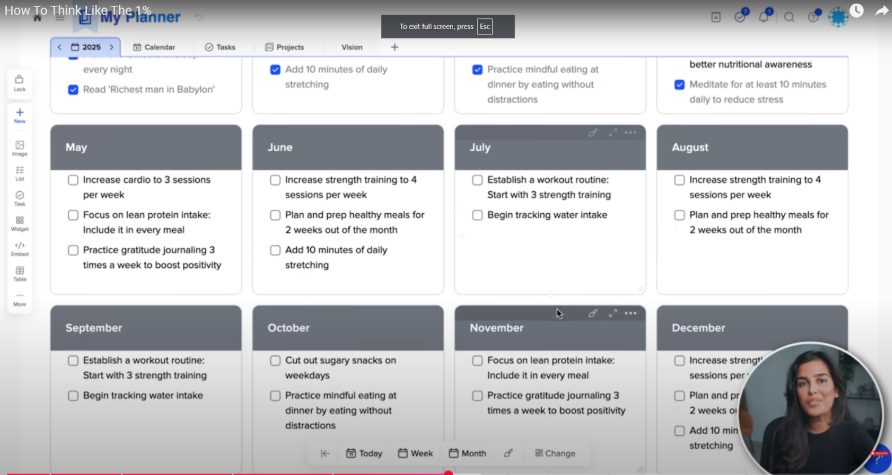
Here’s an example of a YouTube influencer, Nisha, advertising a productivity tool on her channel. This is a relevant placement for her audience who follow her channel for financial and productivity tips, and it boosts the tools’ perceived value: if such a successful person uses the tool, using it can help replicate her success.
Personalize Triggers
The 2021 Ecommerce Personalization Benchmark Report by Netcore found that personalization almost always increases order value. This is understandable: personalized means more relevant.
You can trigger user need recognition through:
- Personalized landing pages highlighting different product features based on traffic source or ad campaign.
- Smart product bundles or “frequently bought with” sections based on customer shopping behavior. Phillips managed to increase conversions by 40% with smart personalized recommendations, and 35% of Amazon’s revenue comes from theirs.
- Personalized search results based on previous user actions in your shops. Think past searches, clicks, and products added to the cart.
Doofinder allows you to create smart recommendation carousels and personalize search results. Start your free trial to learn how.
Promote Products with Custom Search
Many eCommerce solutions, including Doofinder, allow you to customize the search results to promote specific products. This, combined with customer-behavior-based smart search, enables you to put relevant products in front of your users even before their intent is fully formed.
Visit our support center to learn more about the Doofinder functionality and how easy it is to set up.
Supporting the Customer Journey Beyond Need Recognition
Once a customer realizes they want something, your job is to nurture that spark before it fades. This moment is fragile. Get it right, and they move forward to complete the purchase. Miss it, and they bounce.
Here are a few best practices that can help.
Guide Them to a Solution, Fast
When the customer realizes they have a problem, help them find the solution as quickly and as easily as possible. Because the more effort it requires to find your product, the less likely they are to pick it.
Here are a few strategies that can help:
- Optimize product pages for search and increase their visibility in rich results with markup schema. For example, add information about the price, customer ratings, and delivery details like the online retailers below selling Sony cameras.
- Enable detailed search filters to help narrow down choices.
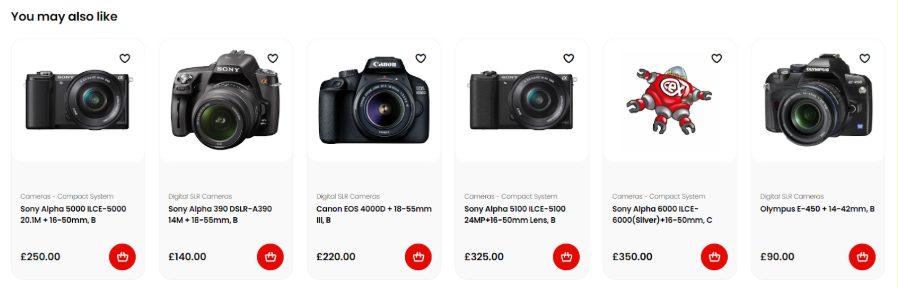
- Show similar products to expand their options (see example CEX below).
- Create interactive guides and quizzes that lead them to the right product. Like the ones you can create in Doofinder.
Make Product Differences Easy to Understand
With dozens or even hundreds of alternatives available, helping customers understand the differences between them is vital. If they find them overwhelming, they will give up. Or purchase a product that doesn’t satisfy their needs, leading to a negative experience, poor reviews, returns — all of which increase your overheads and reduce the likelihood of future purchases.
You can help customers understand product differences by:
- Providing comparison tables or side-by-side breakdowns for high-consideration products.
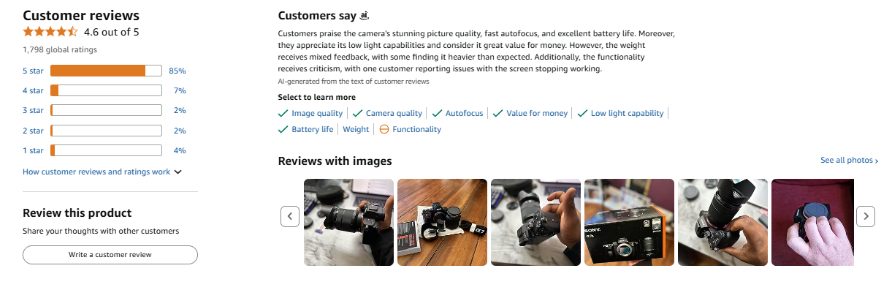
- Highlighting review summaries and average ratings at a glance.
- Creating feature comparison grids to showcase what makes your product stand out.
- Writing in-depth comparison guides on your blog.
Whatever tactic you use, be transparent. Mention product limitations or tradeoffs clearly and honestly. Selling your product under false pretences is a short-sighted strategy.
Keep the Experience Fluid Across Devices
Most eCommerce transactions happen on mobile devices — around 70% of them, and mobile traffic accounts for around 80% of online store visits, according to Statista. However, you don’t want to alienate the remaining customers who prefer online shopping on desktop devices, so your store needs to be optimized for all of them.
There’s more! Shoppers may use different devices at different stages of the buying journey: discover a need on mobile, research on desktop, and purchase days later via mobile again.
Here’s how to ensure a positive shopping experience across multiple devices:
- Make search consistent and intuitive across platforms.
- Preserve recently viewed items, queries, or carts between visits so they can jump back in where they left.
- Re-engage customers through personalized retargeting or email reminders based on their prior site activity.
Remove Friction from the Purchase Process
Around 70% of online shoppers abandon their carts without making a purchase. One of the reasons is excessive friction. The more hoops they have to jump through, the more likely they are to drop off.
Here’s how:
- Add the Buy now button and cut out unnecessary steps from the checkout process.
- Enable single sign-on (SSO) so that they can create an account with their existing email or social media credentials. It makes the experience safer and removes the need to complete lengthy forms which, let’s face it, we’d all rather avoid.
- Enable guest checkouts, without creating accounts, and only give them the option to save their details later.
- Display the final product price inclusive of shopping costs and taxes. Drip pricing is a major turn-off and some jurisdictions ban it outright.
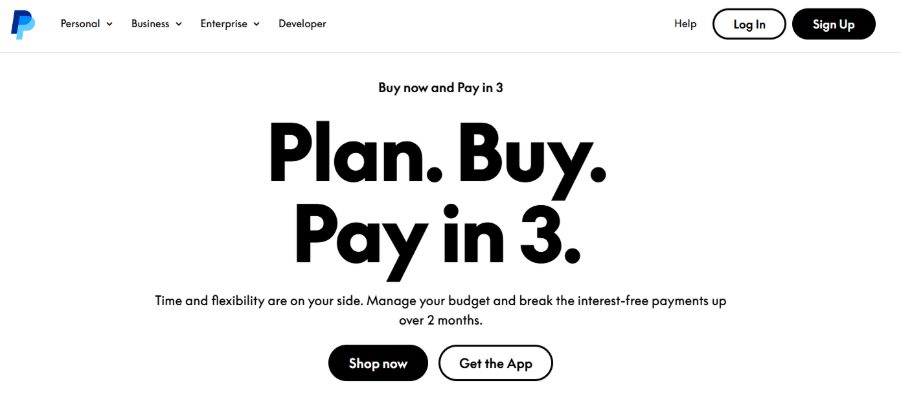
- Offer multiple payment methods, including “buy now, pay later” ones, like PayPal’s Pay in 3. Tailor them to the target market preferences.
Create a sense of urgency
Another way to prompt quick purchases is by using urgency signals to evoke FOMO in shoppers. For instance, you can do it with low stock alerts. Ryanair uses this strategy regularly to urge quick flight bookings.

Limited time offer countdowns are similarly used by many companies, specifically airlines. These strategies are effective because they hinge on powerful psychological processes described by Robert Cialdini in his all-time classic, Persuasion.
Reassure Buyers about their Choices
Social proof is another of Cialdini’s persuasion tactics used frequently in eCommerce to drive sales. And it works. Salesforce has found that products with 5+ reviews are more likely to sell, and displaying user-generated images and videos can increase conversions by up to 200%.
Social proof also puts buyers at ease after they make the purchase. Ipsos data shows that 42% of Americans regret buying products, and the result could be order cancellations or returns.
However, you can alleviate buyer’s remorse by embedding testimonials or reviews into the order confirmation page. To reassure them, they’ve made the right choice.
Close the Loop (and Reopen the Funnel)
As mentioned, the journey doesn’t end with “thank you for your order.” What happens after the purchase is an opportunity to build customer loyalty, boost customer satisfaction, and trigger repeat purchases.
You can keep customers engaged by:
- Following up with review requests a few days after delivery.
- Sending personalized product recommendations based on recent purchases.
Offering helpful content that will help them maximize the product value and improve their experience, like care tips or how-to guides. This encourages them to use the product effectively and recognize its true value.
Conclusion
The consumer decision process begins with need recognition — long before checkout. Brands that gain a competitive edge don’t wait for customers to start the journey on their own. They shape it with advertising and online store experiences that spark their desire to own their products and improve their lives.
Thanks to Doofinder, eCommerce businesses can trigger the purchase process with personalized product recommendations and custom search, and help them choose the right product with the interactive quiz maker. Sign up for the free trial and start driving sales today!