
Elasticsearch is a powerful search engine, but it isn’t always the most practical choice for eCommerce product search. Shoppers type messy queries, expect fast filters, and abandon quickly when results feel off. You can build a great product search experience on Elasticsearch, but it often takes more engineering time and ongoing tuning than teams expect.
That’s why many stores choose alternatives built specifically for product discovery. These tools typically include relevance controls, merchandising features, analytics, and personalization—so you spend less time maintaining search and more time improving conversion.
In this article, we’ll cover 8 of the best Elasticsearch alternatives for product search in 2026, what each one is best at, and how to choose the right fit for your store.
Why Use an Elasticsearch Alternative for Product Search?
Elasticsearch is very powerful, but eCommerce teams sometimes choose an alternative when they want more of that packaged up and ready to use, with less custom build and ongoing tuning.
Here are the most common reasons to choose an Elasticsearch alternative for product search:
- Less engineering overhead: Elasticsearch often requires extra work for relevance tuning, monitoring, scaling, and ongoing maintenance—especially as your catalog and traffic grow.
- Built-in merchandising controls: Tools purpose-built for eCommerce typically include banners and campaigns scheduling so merchandisers can optimize search without dev tickets.
- Analytics that lead to action: You’ll often get ready-to-use dashboards for top searches, zero-results queries, click-through rates, and search-to-cart/search-to-purchase so you can improve what’s not working.
- Personalization and recommendations: Elasticsearch can support personalization signals, but many eCommerce platforms include built-in personalization and recommendations, so you don’t have to build that layer yourself.
- Easier integrations: Alternatives often provide ready-made integrations for platforms like Shopify, Magento, WooCommerce, plus feeds and APIs for product data.
Ultimately, the best Elasticsearch alternative is the one that gives you control, insight, and measurable lift without an unnecessary engineering.
What to Consider When Considering Elasticsearch Alternatives?
Not every “search tool” is a true product-search platform. Before you switch away from Elasticsearch, make sure the alternative actually fits how your store sells—your catalog structure, your team, and how often you need to tune results.
Here are the most important things to evaluate:
- Relevance controls (day-to-day tuning): Can you easily manage synonyms, typo tolerance, boosting/burying, pinning, and rules without engineering help?
- Merchandising features: Does it support searchandising, curated collections, banners, and the ability to promote specific products or categories for key queries?
- Speed + filtering at scale: How well does it handle faceted search and large catalogs without slowing down—especially during peak traffic?
- Analytics that drive action: Look for visibility into top queries, zero-results searches, click-through rates, and conversion from search so you can fix problems quickly.
- Personalization & recommendations: If your strategy includes discovery, check whether it supports personalized ranking and product recommendations (and how much data it needs to work well).
- Ease of integration: Confirm it works cleanly with your platform (like Shopify, Magento, WooCommerce) and your product feed, inventory, and tracking setup.
- Pricing model + predictability: Understand what you’re paying for (queries, sessions, GMV, features, add-ons) and whether costs stay predictable as you grow.
- Reliability, scalability, and support: Ask about uptime expectations, scaling approach, onboarding help, and whether you’ll need ongoing technical resources to maintain it.
A good rule of thumb: the best alternative is the one that gives you better control over product discovery (for both merchandisers and developers) while making it easier to improve search performance over time.
Search Reality Check. Around 41% of eCommerce websites have issues with their search, which means a huge chunk of stores are leaking revenue through poor product discovery.

The 8 Best Elasticsearch Product Search Alternatives in eCommerce
To build this list, we looked at a mix of product capabilities and real customer feedback—especially reviews on G2. G2 is a well-known software review marketplace where users rate tools and share what it’s like to implement and run them day to day (ease of use, support, results, pricing, and more).
Throughout the alternatives below, we’ll reference common themes that show up in G2 reviews—what teams consistently like, what they struggle with, and which platforms tend to work best for different types of eCommerce stores.
1. Doofinder
Doofinder is an AI-powered site search and product recommendation solution built for eCommerce teams that want faster setup and more control over product discovery—without the need for engineers. It’s positioned as a top-rated tool on G2 and is especially known for its quick implementation plus a user-friendly interface.
Doofinder focuses on delivering personalized results extremely quickly, and pairs “search” with merchandising and recommendations so teams can improve discovery and conversion from one place.
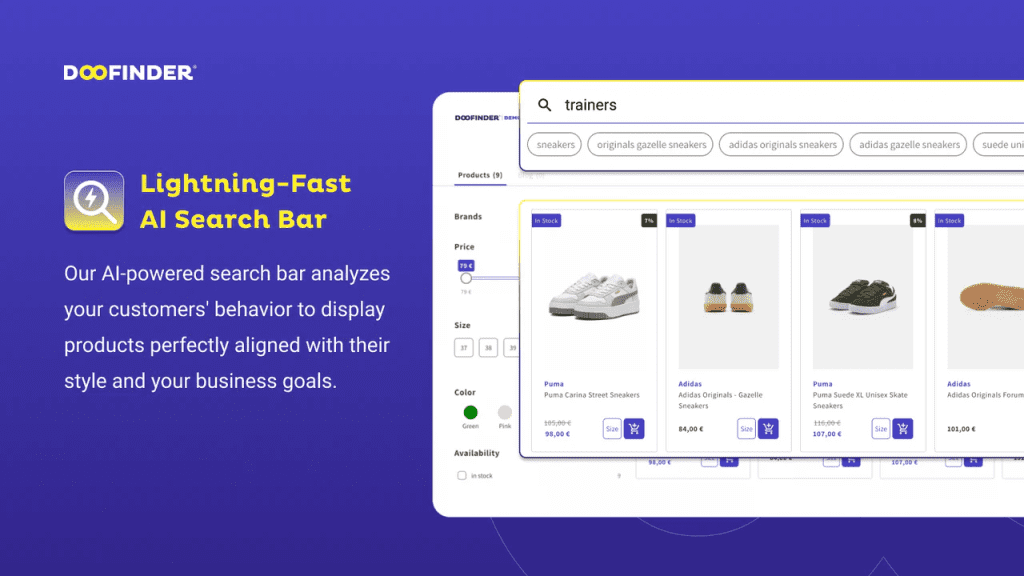
Key features:
- AI Search Personalization + shopper-friendly relevance: Doofinder includes features designed for real-world product searching—like typo tolerance, synonyms, and personalization—so customers still find items even when queries are incomplete, misspelled, or vague.
- Searchandising controls (merchandising in results): You can actively shape results with tools like banners, boosting, custom/excluded results, and redirects—useful for seasonal campaigns, high-margin pushes, or steering shoppers away from out-of-stock items.
- Multi-modal discovery + reporting: Beyond standard text search, Doofinder highlights voice and visual search plus built-in reporting (“Statistics”) to track performance and improve outcomes over time.
- Conversational AI Assistant: A chat-style shopping assistant that helps customers find products using natural language. It’s fast to set up and works alongside search + merchandising + recommendations to improve discovery and conversion from one place.
Pricing: Doofinder plans start with a Basic plan around €49/month, with higher tiers increasing limits/features.
Integrations: Doofinder offers platform integrations and is compatible with all the common eCommerce stacks.
Pros (from G2 review themes):
- Doofinder’s ease of use and consistent customer support are repeatedly praised.
- The tools have been considered to significantly improve the user experience, both through great search relevance as well as an intuitive UI.
Cons (from G2 review themes):
- Pricing can feel confusing for some teams (especially during scaling).
Best for: eCommerce teams that want a fast rollout, strong merchandising controls, and a platform that’s manageable without needing a fulltime dedicated engineering.
2. Algolia
Algolia is an end-to-end AI search and discovery platform designed for businesses that want fast, relevant search experiences across websites and apps. It’s widely used when teams want the performance and flexibility of a serious search stack—without running and scaling Elasticsearch infrastructure themselves.
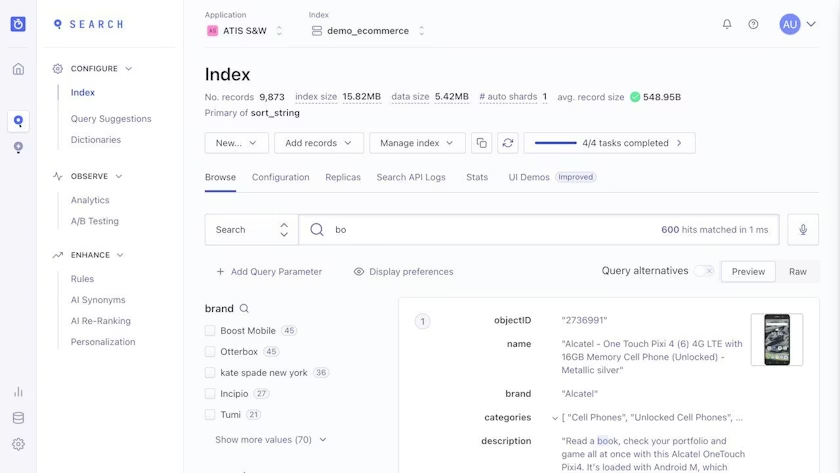
Source: Algolia
Key features:
- Search analytics + insight loops: Algolia includes analytics that help teams identify what users search for, where they drop off, and which content/products perform best—so relevance improvements can be guided by data instead of guesswork.
- Relevance foundations for product search: It’s built around the “must-haves” for eCommerce queries—typo tolerance, synonyms, and faceting—so users can filter and still get strong results even with messy input.
- Scaling from dev to production: Algolia’s packaging explicitly supports a “try free → scale up” approach, so teams can prototype quickly and then move into higher tiers when traffic and requirements grow.
Pricing: Algolia states its Build plan includes 1M records free and 10,000 requests/month (no card required), with paid options for scaling beyond that.
Integrations: Algolia supports common commerce/content stacks (and a broad ecosystem of API clients and integrations).
Pros (from G2 reviews):
- Often praised for speed and search performance at scale.
Cons (from G2 reviews):
- Some users flag pricing predictability and cost scaling as usage grows.
- Several users have expressed concerns over the occasional occurrence of downtime.
Best for: Teams with developer support that want API-first control, strong performance, and a mature hosted search platform instead of operating Elasticsearch clusters.
3. Bloomreach
Bloomreach is an enterprise-grade product discovery platform that combines site search, merchandising, recommendations, and personalization in one system. Instead of treating search as a standalone “engine,” Bloomreach positions product search as part of a broader commerce experience layer—useful if you want search, category pages, and recommendations to work together.
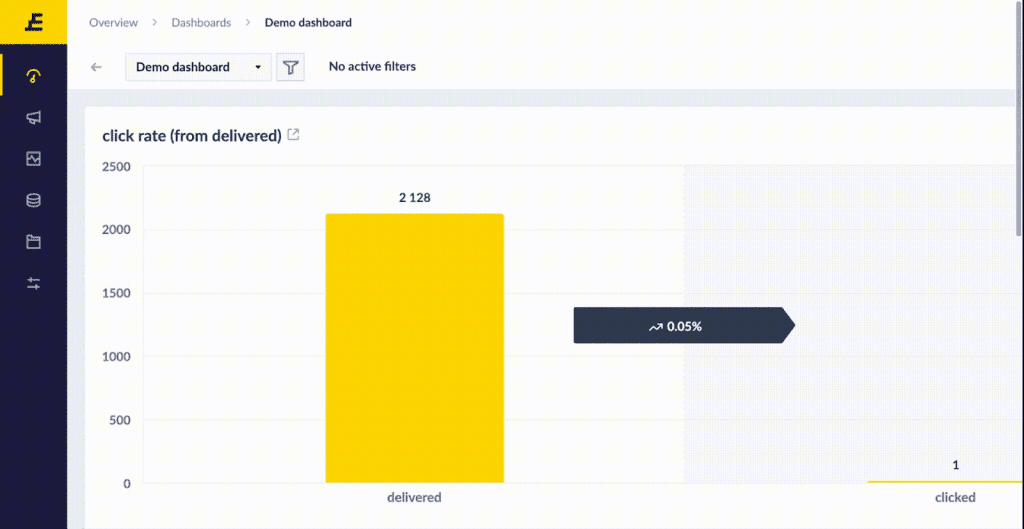
Source: Bloomreach
Key features:
- AI-powered search + recommendations (built for commerce): Bloomreach Discovery is designed to power product search experiences with relevance and discovery features, and pairs search with recommendations so shoppers can browse even when their queries are vague.
- Merchandising controls + optimization: The platform is built around improving product discovery outcomes (not just returning results), including tooling that supports merchandising workflows alongside search and recs.
- Personalized experiences: Bloomreach emphasizes personalized search experiences powered by its AI/personalization layer, aimed at improving conversion and revenue per visitor for search users.
Pricing: Bloomreach is typically custom / usage-based, often described as a combination of a platform/module fee plus a usage fee (with add-on modules depending on what you need).
Integrations: Bloomreach supports common commerce platforms and connector-style implementations.
Pros (from G2 review themes):
- Bloomreach is valued for its strong customer support.
- Many users also praise ease of use and the breadth of capabilities once it’s up and running.
Cons (from G2 review themes):
- The learning curve / complexity comes up, especially when teams are getting started or trying to use everything the platform offers.
- Some reviewers mention reporting/insights can feel confusing or not as intuitive as expected.
Best for: Mid-market to enterprise eCommerce teams that want a more “all-in-one” product discovery stack (search + merchandising + recommendations + personalization) and have the operational bandwidth to implement and optimize a broader platform—not just swap in a search API.
4. Luigi’s Box
Luigi’s Box is an eCommerce-focused AI search & product discovery suite that combines site search with tools like autocomplete, recommendations, and analytics—aimed at improving
product findability and conversion without running your own Elasticsearch setup.
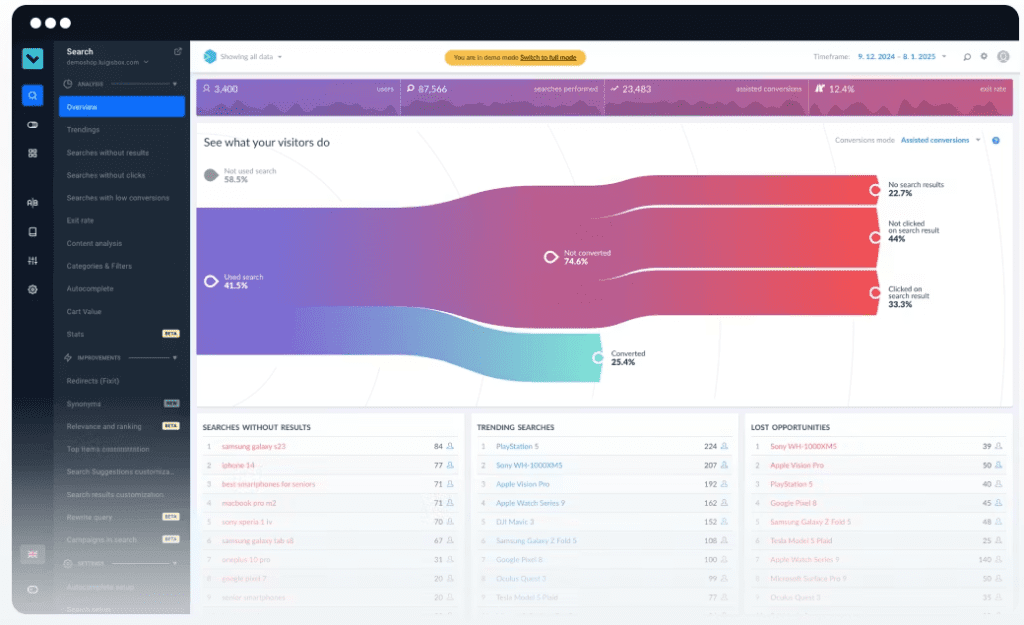
Source: Luigi’s Box
Key features:
- Typo tolerance + typo correction: Helps shoppers still find the right products even when queries are misspelled or messy (reducing “no results” dead-ends).
- Search personalization + query redirects: Includes personalization features (using behavior signals) and rule-based query redirects to send shoppers to the right page when it makes more sense than a results list.
- Search-as-you-type/autocomplete + synonyms management: Speeds discovery with predictive suggestions and supports managing synonyms so shoppers can search in their own words.
- Recommendations + product listing tools: Luigi’s Box bundles discovery features beyond search (e.g., recommender and product listing) to support browsing and cross-sell.
Pricing: Luigi’s Box offers a free trial (no credit card required) for self-service, and pricing is described as usage-based / scalable (final price depends on products in use + usage).
Integrations: Luigi’s Box lists integrations across common eCommerce platforms and tools, including dedicated pages for Shopify and BigCommerce.
Pros (from G2 review themes):
- Frequently praised for being easy to use and having an intuitive interface.
- Support quality is a recurring highlight (helpful during implementation and tuning).
Cons (from G2 review themes):
- Several customers mention a slight learning curve at the start of use.
- Some reviewers mention it can feel expensive, especially for smaller projects/budgets.
Best for: eCommerce teams that want an all-in-one search + discovery toolkit (search, merchandising-style controls, recommendations, analytics) with strong usability and support—without maintaining Elasticsearch infrastructure.
5. Athos Commerce
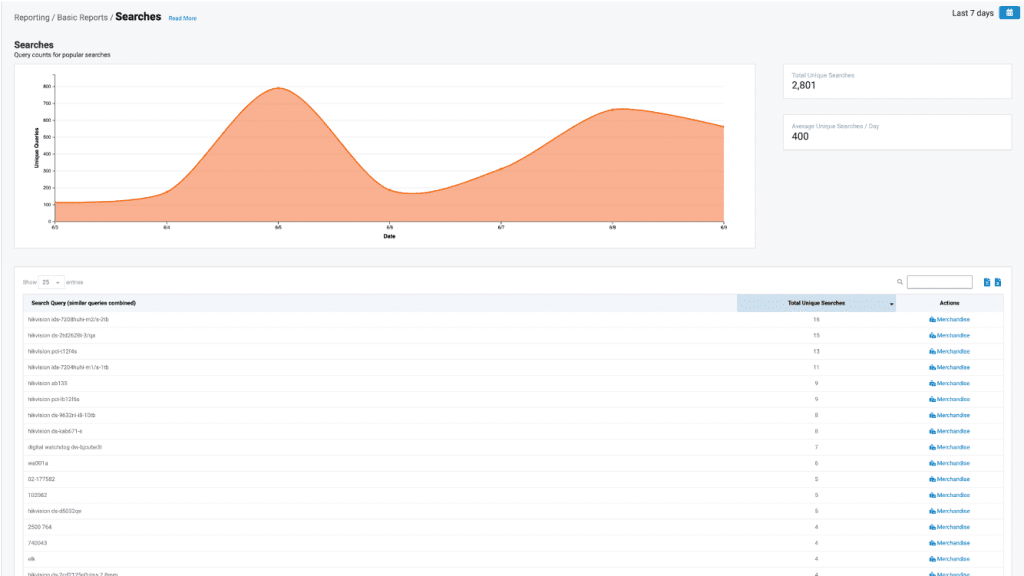
Athos Commerce is an eCommerce-focused product discovery platform that brings together site search, merchandising, personalization, reporting/insights, and product data management—built to help retailers improve product findability and conversion without running their own Elasticsearch stack.
Source: Athos Commerce
Key features:
- AI-powered site search: Athos positions its site search as built to turn shopper queries into revenue (fast, relevant results designed for commerce behaviors like filtering and browsing).
- A/B testing & experimentation (built in): Athos highlights A/B and multivariate testing to validate merchandising decisions—e.g., testing boost rules, pinned products, banners, and even filter order across search and category pages—so teams can prove what drives conversion and then scale it.
- Merchandising + personalization suite: The platform is designed to let teams influence what shoppers see via merchandising and personalized experiences—so discovery isn’t just “search results,” it’s curated and optimized.
- Reporting & insight: Athos includes reporting/analytics as part of the core stack so teams can identify what’s working (and where search is leaking revenue).
Pricing: Athos Commerce pricing is typically custom (common for platforms selling a broader discovery + merchandising suite rather than a single lightweight search tool).
Integrations: Athos supports common commerce ecosystems and lists app-style integrations—BigCommerce references Athos Commerce app features like site search and data feed management.
Pros (from G2 review themes):
- Reviewers often highlight that search relevance is strong out of the box and that the platform is easy to work with once implemented.
- Support quality comes up frequently as a positive.
Cons (from G2 review themes):
- Some reviews mention implementation fit can vary depending on requirements/platform (especially for more complex setups).
Best for: Mid-market and enterprise retailers that want a full product discovery stack (search + merchandising + personalization + analytics) and prefer a vendor-managed platform rather than maintaining Elasticsearch infrastructure internally.
6. Constructor
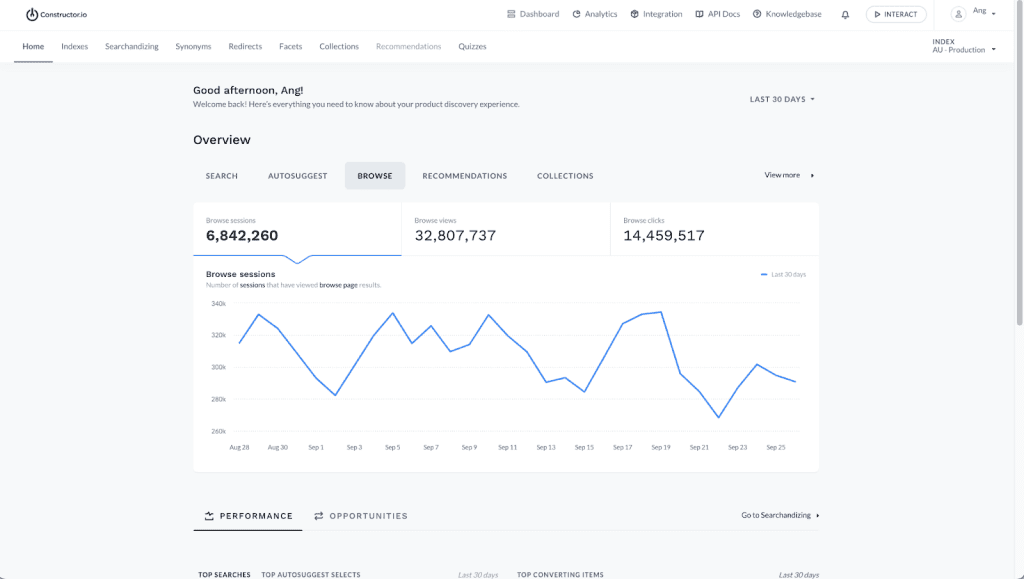
Constructor is an enterprise-focused product search and discovery platform built specifically for eCommerce. Its core pitch is “KPI-obsessed” ranking: it uses shopper clickstream behavior (and reinforcement learning) to continuously improve results for search and browsing experiences—so teams spend less time hand-tuning rules and more time lifting conversion and revenue.
Source: Constructor
Key features:
- Behavior-driven personalization (reinforcement learning): Constructor learns from shoppers’ behavioral clickstream and uses reinforcement learning to improve rankings over time—aimed at better relevance and better business outcomes.
- Merchandising controls + “merchant intelligence”: Alongside algorithmic ranking, it offers real-time merchandising controls so teams can promote campaigns, key products, or seasonal pushes without constant developer involvement.
- Full discovery suite (search + browse + recommendations + testing): Constructor bundles product discovery capabilities like autosuggest, recommendations, and A/B testing, so you can iterate on relevance and UX with measurable impact.
Pricing: Constructor is typically sold as a vendor-led, enterprise SaaS with multiple editions and a free trial noted on G2 (final pricing usually depends on scale/requirements).
Integrations: Constructor offers connector-style integrations for common commerce stacks—e.g., a Shopify app (“Constructor Connect”), BigCommerce connector listings, and Salesforce Commerce Cloud (SFCC) integration via AppExchange.
Pros (from G2 review themes):
- Personalized results + strong commercial impact (teams often cite improved discovery and conversion outcomes).
- High-quality support and a powerful dashboard/control surface for managing the discovery experience.
Cons (from G2 review themes):
- Learning curve / “powerful but not always intuitive at first,” especially when getting comfortable with configuration and reporting.
- Multiple users have commented that it seems the search algorithm needs significant time to adapt.
Best for: Mid-market to enterprise retailers (especially larger catalogs and higher traffic) that want a performance-focused discovery platform—personalized ranking + merchandising controls + experimentation—without running an entire internal infrastructure.
7. Insider One
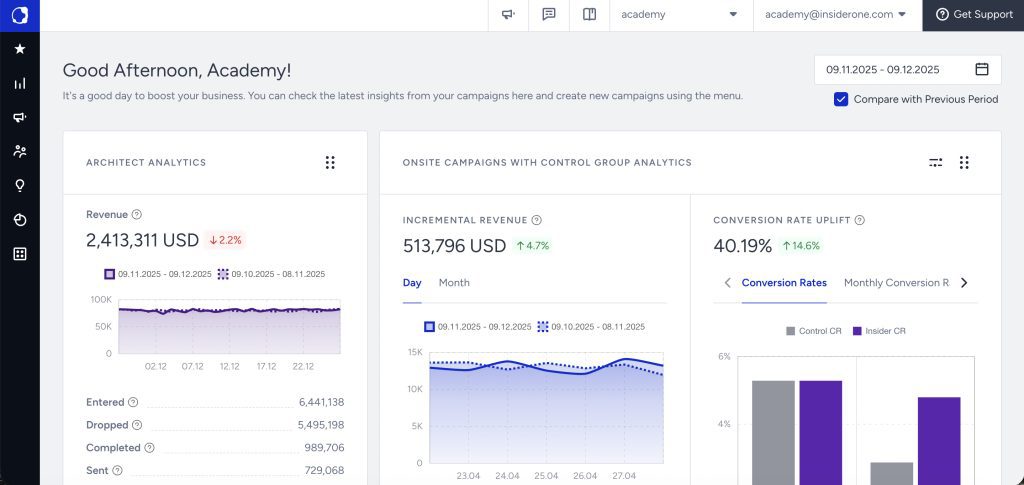
Insider One is basically a customer marketing platform with AI built in. One of the things it includes is on-site store search, but the key point is: search isn’t a separate add-on. It’s connected to your customer data and personalization, so what people see in search can match what you know about them and can link into campaigns across email, SMS, WhatsApp, app, and web.
That “all-in-one” approach is what most clearly sets it apart from running Elasticsearch by itself.
Source: Insider One
Key features:
- AI-powered site search + “instant search recommendations”: Designed to improve product discovery with fast, shopper-friendly search experiences.
- Merchandising + search customization: Insider positions its search offering around tuning discovery outcomes (what shows up, how it’s presented, and how shoppers are guided), not just returning relevant documents.
- Facets + synonym/typo tolerance foundations: Their eCommerce search guidance emphasizes faceted filtering, and handling synonyms + typos—core requirements for product search UX.
Pricing: Typically custom / sales-led (Insider One is sold as a broader platform; exact costs depend on modules like Site Search and scale).
Integrations: Insider markets strong commerce integrations (e.g., Shopify-focused personalization and cross-channel experiences), and positions the platform as compatible with typical eCommerce stacks.
Pros (from review themes):
- Multiple users highlight cross-channel breadth (lots of channels in one place) and personalization/engagement capabilities as major wins.
Cons (from review themes):
- Insider One is considered to be rather complicated to set up, considering all the different capabilities.
Best for: eCommerce teams that want product search tightly connected to personalization + lifecycle messaging (web/app + email/SMS/WhatsApp), and prefer a unified platform approach rather than running Elasticsearch + separate tools for these customer journeys.
8. Boost Search & Discovery
Boost Search & Discovery is an eCommerce-focused search and product discovery platform designed to replace custom-built Elasticsearch setups—especially for stores running on Shopify and other mainstream commerce platforms. Its core value proposition is simple: deliver strong, shopper-friendly relevance and merchandising controls out of the box, without requiring ongoing engineering-heavy tuning.
Boost positions itself as a practical, conversion-oriented alternative to Elasticsearch, aimed at teams that want reliable search performance, fast filters, and clear controls—without adopting a large enterprise discovery suite.
Key features:
- Fast faceted search + filtering at scale: Boost is widely used for its filtering and collection search performance, especially on Shopify stores with large catalogs. Facets load quickly, support complex rules, and are designed to feel responsive even under heavy traffic.
- Back in stock notifications: Boost AI Search & Discovery lets shoppers subscribe to alerts for out-of-stock products, helping merchants capture high-intent demand and drive conversions when inventory is replenished.
- Shopper-friendly search basics (out of the box): Includes typo tolerance, synonym management, autocomplete, and instant search results to handle real-world queries (misspellings, partial terms, vague intent).
Pricing: Boost AI Search & Discovery is typically sold via tiered plans (especially visible in app marketplaces like Shopify), with pricing based on features and store scale. Entry-level plans start at €29, with higher tiers unlocking advanced capabilities.
Integrations: Boost is especially well known for its Shopify-native integration, and is commonly adopted by Shopify merchants looking to replace default search/filtering or avoid custom Elasticsearch builds. It also supports API-based integrations for broader stacks.
Pros (from review themes):
- Easy to install and configure, particularly on Shopify.
- Merchandising controls are accessible to non-technical users.
Cons (from review themes):
- More advanced personalization and AI-driven ranking are less emphasized compared to enterprise platforms.
- Best suited to commerce use cases—less flexible for non-product or highly custom search needs.
Best for: Small to mid-sized eCommerce teams—especially Shopify merchants—that want a dependable Elasticsearch alternative focused on fast filters, solid relevance, and hands-on merchandising control, without the complexity or cost of enterprise discovery platforms.
What are the best Elasticsearch alternatives beyond product search?
If you’re looking for Elasticsearch alternatives outside of eCommerce product search, the right replacement depends heavily on what you’re searching and why. Elasticsearch is often adopted as a general-purpose search engine, but many non-commerce use cases are better served by tools built specifically for logs, content, apps, or enterprise knowledge.
Below are the most common non–product-search scenarios where Elasticsearch is used—and the platforms that tend to be a better fit.
Log search & observability (DevOps, infrastructure, security)
When Elasticsearch is used for logs, metrics, or security events, the core need is observability: fast ingestion, time-based queries, dashboards, and alerting—not relevance tuning.
Common alternatives:
- Datadog (logs, metrics, APM in one platform)
- Splunk (enterprise log search and SIEM)
- Grafana Labs (Loki + Prometheus for logs and metrics)
Why teams switch: Running Elasticsearch for logs is operationally heavy and costly at scale. Purpose-built observability tools offer faster setup, richer dashboards, and predictable pricing tied to ingestion and retention.
Best fit if: You’re searching events, logs, or traces and need reliability, alerting, and visibility—rather than user-facing search relevance.
Content & documentation search (blogs, help centers, knowledge bases)
For documentation and content sites, search quality depends more on semantic understanding, UX, and good defaults than raw indexing flexibility.
Common alternatives:
- Algolia (fast, hosted site and doc search)
- Coveo (content and knowledge discovery)
- Swiftype (content-focused hosted search)
Why teams switch: Elasticsearch often requires significant manual tuning for content relevance (titles, recency, intent). Hosted content search tools handle this out of the box with simpler controls.
Best fit if: Users are searching for answers, documentation, or long-form content—not items to purchase.
App & website search (SaaS products, internal tools)
Many SaaS products embed search into dashboards, admin tools, or internal systems. These use cases prioritize speed, APIs, and developer experience over commerce features.
Common alternatives:
- Meilisearch (lightweight, developer-friendly)
- Typesense (fast keyword search with filters)
- Algolia (API-first, scalable app search)
Why teams switch: Elasticsearch can be overkill when teams don’t want to manage clusters. API-first search services enable faster iteration and simpler scaling.
Best fit if: You’re building in-product search for records, users, or structured data.
Marketplace & listings search (jobs, rentals, travel, services)
Marketplaces look like eCommerce, but discovery logic is different. Freshness, availability, location, and ranking experimentation matter more than classic merchandising.
Common alternatives:
- Algolia (marketplace and geo-heavy search)
- Constructor (learning-to-rank for listings)
- Custom ranking systems built on vector + filter stacks
Why teams switch: Elasticsearch can support marketplaces, but requires heavy custom ranking logic. Marketplace-oriented tools bake in relevance experimentation and ranking signals.
Best fit if: Your “products” behave like listings with location, time sensitivity, or availability constraints.
Enterprise & internal knowledge search
Large organizations search across wikis, files, tickets, CRM systems, and internal tools. Permissions, connectors, and governance are the hard problems.
Common alternatives:
- Glean (workplace and knowledge search)
- Microsoft Search (M365-integrated search)
Why teams switch: Elasticsearch isn’t designed for multi-source enterprise search with permissions out of the box. Enterprise platforms focus on security, connectors, and cross-system relevance.
Best fit if: Search spans many internal systems and requires strong access control and governance.
Final Thought: Choose an Elasticsearch Alternative That Grows With You
The right Elasticsearch alternative should support where your business is today—while still scaling with your catalog, traffic, and team tomorrow. That means predictable pricing, flexible relevance controls, and features you can adopt gradually as your search strategy matures.
Rather than locking you into heavy customization or forcing an early jump to enterprise complexity, a strong alternative grows alongside your needs—helping you improve product discovery, conversion, and revenue without reintroducing the same operational burden you were trying to escape.