
Customer expectations are rising faster than most brands can adapt. Shoppers want quick answers, helpful suggestions, and an experience that simply feels easy from the moment they arrive on a site. They don’t want to hunt for information or struggle to find the right product. But traditional engagement tactics weren’t built for journeys that move this quickly or change this often.
AI is stepping in because it can understand what customers are trying to do, anticipate what they might need next, and personalize the experience in real time. It helps brands show up for shoppers in a way that feels timely, relevant, and genuinely supportive.
This article explores seven AI-powered customer engagement strategies that help brands create campaigns people actually connect with. Each one is grounded in real data and focused on practical results. These are the same approaches leading companies are using right now to build closer relationships and drive stronger revenue through better experiences.
The 7 AI Strategies Transforming Customer Experience
Here’s a closer look at the seven AI strategies that are reshaping how brands engage with customers today.
Strategy 1: Use AI to Identify and Remove Friction Points in Real Time
Instead of focusing on personalization, AI can monitor how shoppers move through the site and detect when they’re running into obstacles—slow-loading pages, confusing filters, dead-end searches, or product pages with unusually high exits. When AI spots these friction signals, it can automatically adjust the experience to keep the shopper moving.
For example, if many users abandon a page after applying a filter, AI can suggest alternative filters or surface bestsellers instead. If search results return too few products, the system can widen the criteria or offer related categories so the shopper doesn’t hit a dead end.
Want to learn more about site search optimization? Check out our article with 19 site search optimization strategies.
Strategy 2: Use Predictive AI to Anticipate Customer Needs
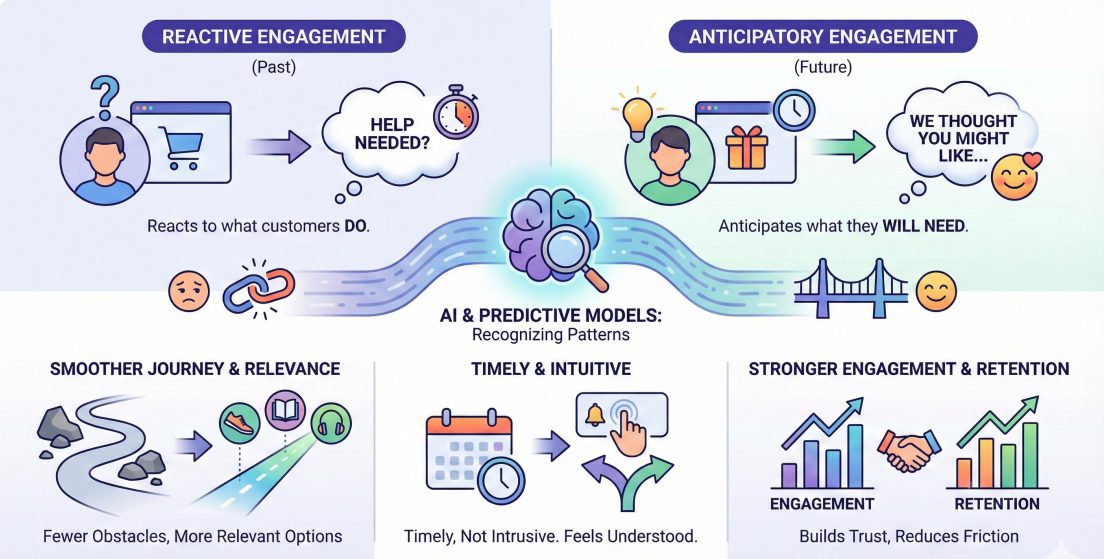
Most engagement still reacts to what customers do, but AI allows brands to anticipate what they will need next. Predictive models can recognize patterns in browsing behavior, purchasing habits, and timing, so brands can offer helpful suggestions before customers ask for them. This creates a smoother, more intuitive experience.
Predictive insights can support everything from product recommendations to identifying customers who may be losing interest. Many studies show that businesses using predictive tools often see stronger engagement and better retention because shoppers encounter fewer obstacles and more relevant options.
Good predictive experiences feel timely rather than intrusive. A well-timed reminder, a recommendation that fits the moment, or a gentle nudge during a decision point helps customers feel understood and supported. When done right, this kind of anticipatory engagement builds trust and reduces friction across the entire journey.
Strategy 3: Add Conversational AI to Guide Product Discovery
Shoppers often know what they want but struggle to describe it in a way that traditional search engines understand. This is where conversational AI is becoming a powerful engagement tool. Instead of typing short keywords, customers can ask questions in their own words and receive clear, relevant results. It creates a more natural experience that feels closer to speaking with a knowledgeable store associate.
Conversational tools can help customers compare products, filter options, understand differences, and surface items that match their needs much faster than manual browsing. Many retailers are finding that this type of interaction keeps shoppers engaged because it removes guesswork and reduces the effort required to find the right product.
Doofinder’s Conversational AI Assistant is an example of how this approach works in practice. A shopper can ask something like “What are good waterproof boots for winter under 150?” and receive focused, helpful suggestions immediately. This turns search into a dialogue and supports customers at key decision points. When the path to the right product feels easier, conversion rates tend to rise and the overall experience feels more personal.
Strategy 4: Use AI to Orchestrate Customer Journeys Automatically
Customer journeys rarely follow a straight line. People move between channels, pause and return later, and shift their intent as they browse. AI can help make sense of these patterns and automatically adjust how a brand responds. Instead of relying on fixed workflows, AI monitors behavior in real time and adapts messages, timing, and channel selection based on what is most likely to help the customer move forward.
This kind of orchestration can coordinate email, SMS, push notifications, on site experiences, and even customer service interactions. When a shopper shows renewed interest, AI can trigger a relevant message. When interest drops, it can change the approach or ease off entirely. The goal is to create journeys that feel natural rather than scripted.
Brands that use AI for journey orchestration often see better engagement because the experience aligns with how customers actually behave. The technology handles the complexity behind the scenes, which allows marketing and service teams to focus on strategy instead of constantly managing individual workflows. The end result is a more consistent experience that supports customers at the right moments without overwhelming them.
Strategy 5: Introduce AI Agents to Improve First Contact Resolution
Customers expect quick answers when they have questions or run into issues. AI agents can handle a large share of these interactions by providing accurate information instantly. They can help with common requests like order updates, product details, returns, and troubleshooting. This reduces wait times and allows human teams to focus on more complex or sensitive cases.
AI agents do more than respond quickly. They can recognize intent, understand context, and guide customers through simple tasks without passing them between departments. When customers get what they need at the first interaction, satisfaction tends to rise and support queues stay manageable. Many businesses report that AI now handles a significant portion of routine inquiries, which helps reduce operational pressure.
The most effective use of AI agents still includes an easy path to human help. When the issue is more complex, the agent can hand the conversation to a service representative along with the relevant context. This creates a smoother experience for both sides. Customers get fast support when questions are simple and thoughtful assistance when issues require a human touch.
Strategy 6: Improve Product Discovery with AI Driven Search
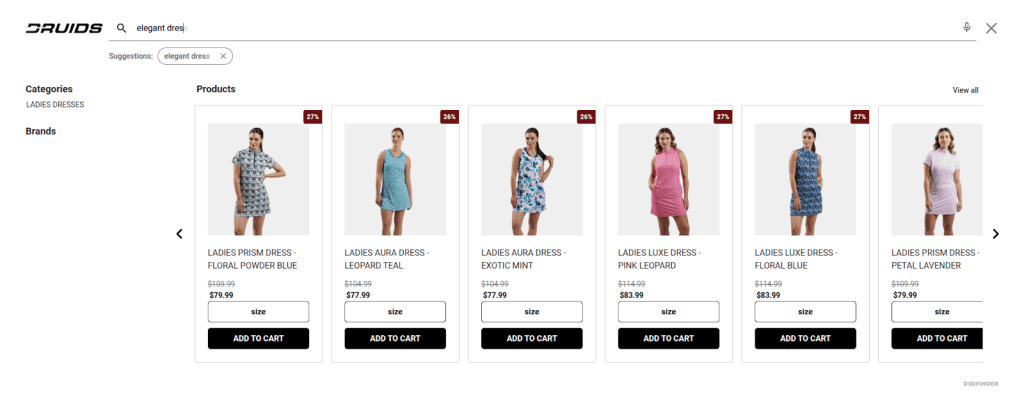
A customer’s experience often depends on how easily they can find what they are looking for. Traditional search tools rely heavily on exact keywords, which can lead to dead ends when customers do not know the right terms. AI driven search improves this by understanding intent, context, and natural language. It can interpret longer queries, handle misspellings, and surface results that match what the customer meant rather than what they typed.
AI can also adjust search results in real time based on behavior. If certain products are performing well for similar shoppers, the system can prioritize them. If a customer signals interest in a category or price range, the results can adapt immediately. These subtle adjustments reduce friction and keep customers engaged longer.
When product discovery feels effortless, customers are more likely to explore, compare, and move toward a purchase. AI search tools help create that experience by reducing the number of steps required to find the right item. This improves engagement across the entire site and often leads to better conversion and stronger customer satisfaction.
Strategy 7: Combine AI Automation with Human Support for the Best Results
AI can handle many tasks that used to require a human team, but it is not a replacement for human connection. Customers still prefer speaking with a person when an issue is complex or emotional. The most effective approach blends the strengths of both. AI takes care of simple, repetitive interactions while humans focus on situations that require empathy, problem solving, or nuanced decision making.
A hybrid model also creates a smoother experience. AI can gather information, interpret the customer’s intent, and provide quick guidance. If the customer needs more help, the conversation can move to a human agent who already has the context. This avoids customers repeating themselves and reduces the time it takes to reach a solution.
Businesses that use this balanced approach often achieve higher satisfaction because customers get the right kind of help at the right moment. AI improves speed and consistency. Humans provide clarity and support where it matters most. Together, they create an engagement model that is more reliable and more responsive than either could achieve alone.
How to Implement These AI Strategies in Your Business
Putting AI into practice doesn’t have to be overwhelming. The key is to start small, focus on high-impact areas, and build on what works. By taking a phased approach, brands can introduce AI in a way that feels manageable for internal teams and meaningful for customers. Here’s a simple three-step path to guide the rollout.
1. Start With One High-Impact Area
Begin by identifying the part of the customer journey with the most friction—product discovery, support response times, or personalization gaps. Focusing on a single, measurable area helps you launch quickly, learn fast, and build internal momentum.
2. Choose AI Tools That Integrate Easily
Select solutions that work with your existing ecommerce platform and require minimal engineering resources. Tools like conversational search, predictive recommendations, or AI assistants can often be deployed in days, not months. Fast integration means faster results.
3. Test, Measure, and Scale What Works
Run a focused pilot with clear success metrics such as conversion rate, engagement, or support resolution time. Use the insights to refine the experience, then expand AI into additional touchpoints. Scaling based on proven outcomes ensures long-term impact and better customer experiences.
Why Now Is the Time for Brands to Invest in AI
Customer expectations are rising faster than manual teams can keep up. Shoppers want instant answers, tailored suggestions, and frictionless experiences across every touchpoint. AI gives brands the ability to deliver this level of personalization and responsiveness at scale, which is something human teams simply can’t achieve on their own.
As more companies adopt AI-powered tools, the gap between brands that embrace these capabilities and those that don’t will continue to widen. Investing now gives businesses a meaningful advantage. They begin collecting richer data, training smarter models, and building a customer experience foundation that improves over time.
Solutions like Doofinder’s AI-driven search and conversational assistant make it possible to introduce these capabilities quickly, without complex development work. And with a free demo, brands can test the impact for themselves before committing. Waiting too long risks falling behind customer expectations and losing ground to competitors who already offer faster, more intuitive shopping experiences powered by AI.